REMEMBER. RECLAIM. RESIST.
In the Taíno language, Nanichi means "my love, my heart."I am Maritza Arroyo Pérez, and I am dedicated to work that keeps our Boricua history, our Taíno roots and our ancestors alive, because our legacy lives in us and preserving our history is an act of resistance.My work is rooted in nanichi, love, for the family we know, for the ancestors we seek, and for the island that holds their memories.By a Boricua, for all Boricuas (and those who love Boricuas!).Taíno Tí.May the Great Good Spirit be with You - the ancestors walk with you.
© Mmelendezbaez | Dreamstime.com
GENEALOGY
La Familia
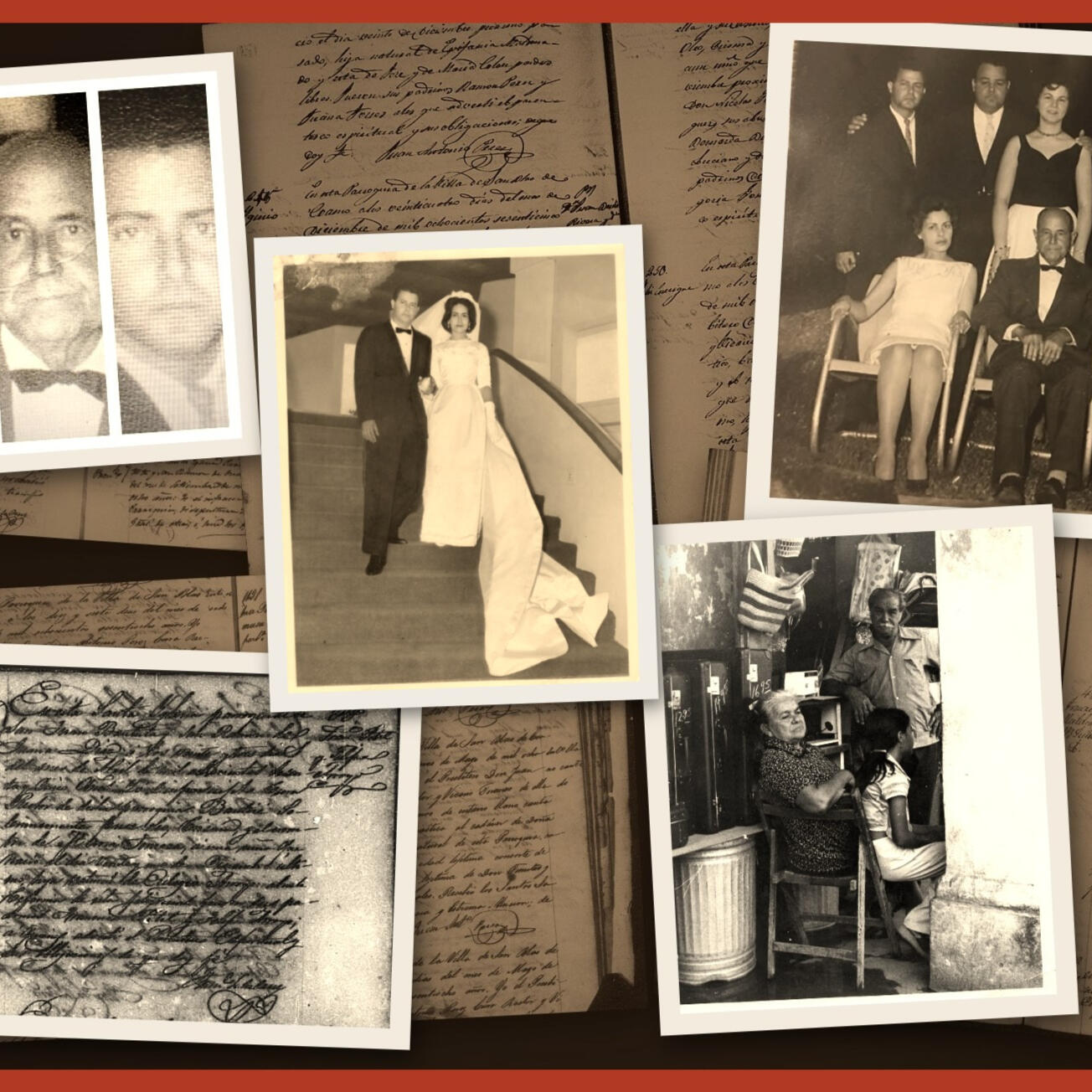
For so many of us, the story of our Boricua heritage is a puzzle: cherished family tales, faded photographs, and a deep connection to an island we may call home, or the home our parents and grandparents were forced to leave behind.Genealogy is an act of resistance.A story is being told about Puerto Rico, written by outside investors, luxury developers and disaster capitalism, telling us our presence is temporary and our history can be bought and sold. But they cannot buy our legacy. They cannot gentrify our bloodline.My research began over twelve years ago, with urgency. I lost my parents in my twenties, and with each transition of a family member, we lost more and more of our stories.Following my maternal line, I have traced my family back to Puerto Rico's first Spanish settlers, to my 14th great-grandfather, Juan de Espinosa, from Mazariegos, Palencia, Spain. He lived in Caparra in 1511 (Juan de Espinosa, natural de Mazariegos, obispado de Palencia, hijo de Juan de la Linde y de María Sánchez.—-30 Junio 1511 - Catálogo de Pasajeros a Indias Vol 1, pg. 18 (1509 - 1534) and received cédula de vecinidad from the King. - La Vida en Puerto Rico en el Siglo XVI Tomo I, pagina 114 - Dr. Luis Burset - ).Caparra was founded by Ponce de León in 1508 with about 50 settlers growing to about 320 by 1512. Like so many ancestors in our stories, Juan was a part of the forced enslavement of Taínos through the cruel encomienda systems and the widespread amancebamiento (forced out of wedlock) that created the massive wave of mestizos (Spanish-Taíno children) born across the island. In my family research, I have found MESTIZO (Spaniard-Taíno), MORENO (Black), MULATO (European-African), PARDO (European-Taíno-African), and LIBERTO (freed slave).I was so fortunate to have found a few of my African ancestors, including my 3rd great grandparents Baltazar Arroyo and Ceferina Dijols, from Juana Díaz, Libertos - freed slaves in 1835. Ceferina was an African slave of Francisco Dijols, owner of Hacienda Boca Chica. Proud that my last name is from an Afro-Boricua who was free before the 1872 emancipation.My published research, The Ancestors of Maritza Arroyo Pérez: The Road to Puerto Rico, has been viewed more than 100,000 times - click on the button below to read!Tips to start your research1. Talk to your elders. Record names, dates, towns and stories.
2. Gather what's at home. Check photos, certificates, letters and family bibles.
3. Work backwards. Begin with your parents or grandparents if they were born before 1950 and go back one generation at a time.
4. Use civil records for anyone born after 1885.
5. Use parish records for anyone born before 1885.
6. Check the census, 1910 to 1950, to see whole households.
7. Take a DNA test to break through brick walls.Research links:
KAKUHU TAROT™
LAUNCH
Kakuhu (kah-KOO-hoo) is vida, life.My genealogy work and this deck come from the same place, the fear of losing our culture and our history. Tracing our roots is an act of resilience and resistance.First, I wanted a tarot deck that I felt connected with, both culturally and spiritually. As I started to think about the concept, I wanted to be guided by name the deck with a Taíno word that capture would capture the essence of the deck. To me that essence was vida, life, but I could not find a Taíno word for it.My naming search led me to Kakuhu (kah-KOO-hoo). It is Lokono, and was adopted by the Language Committee of the United Confederation of Taino People. In Lokono, kaku means “to live” or “life,” and the suffix -hu, in Lokono and ancestral Taíno, turns a verb or an adjective into a conceptual noun. With -hu, kaku becomes “life itself,” “the state of being alive,” “vitality.” Therefore, Kakuhu is life itself.The United Confederation of Taíno People (UCTP) is an international Indigenous leadership and advocacy organization established in 1998 to support the self-determination, culture, and rights of Taíno and Caribbean Indigenous peoples. In September 2025 they launched the campaign "Ni Toh Kakuhu — Water is Life: Climate Justice for Borikén", to address the severe, systemic drought, groundwater depletion, and unchecked over-development facing Puerto Rico. Daka’ti dukan - Mi más profundo respeto to them.What our ancestors believedOur ancestors saw the universe as relational. Harmony was kept through duty, reciprocity and a living connection between everything, whether it breathed or not. Their resistance was not the kind that conquers. They survived by enduring: they planted yuca the hurricanes couldn't take, hid their cemís in the mountain caves, and rose up in 1511. For our ancestors, resilience and resistance were never two separate things. Holding on to their way of life was how they fought back. Five hundred years later, we are in the same fight.The Kakuhu symbol
The three chevrons are Yaya, the primordial cosmic force, and her divine breath, hu. That breath moves outward into the eternal spiral of Atabey and Yúcahu, her female and male energy, who shape the universe, teh world. At the end of the spiral beats nanichi, the sacred heart. From that heart flows Kakuhu, vida, life, breathing soul and existence into Borikén.The deckKakuhu Tarot™ is 78 cards rooted in Borikén. Each card reinterprets traditional tarot through Taíno beliefs, culture and values.The 22 Major Arcana carry the great forces of Taíno life, each a figure, deity or place that marks a major life event. The 56 Minor Arcana are four suits - Cemís (Wands-Fire), Vasijas (Cups-Water), Cobos (Swords-Air) and Yucas (Pentacles-Earth) - things our ancestors used every day. The court cards are Jimaí (Page), Nitaíno (Knight), Cacica (Queen) and Cacique (King).To our Taíno ancestors, death was a transition rather than an end, and preserving the physical presence and memory of their ancestors was an active choice to ensure spiritual protection and community survival. They are with us, within us.Kakuhu Tarot™ has been a 300+ hours of NANICHI-LOVE work, designed for us Boricuas, on the island and across the diaspora.It is a manifesto of resilience and resistance, a work of cultural representation and intuitive practice, reminding us that despite colonization, forced erasure, and historical trauma, the life of Borikén was never extinguished. It continues to beat, breathe and sing in the blood of every descendant.Taíno tí.
May the Great Good Spirit be with you.Y pa'lante, siempre pa'lante.
PRE-ORDER ON KICKSTARTER!
Cards
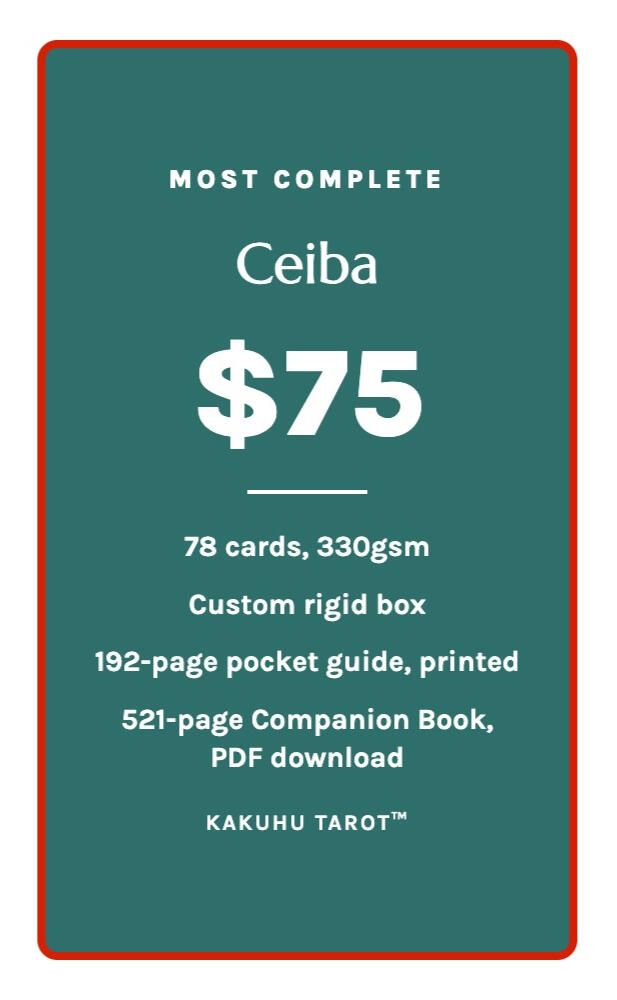
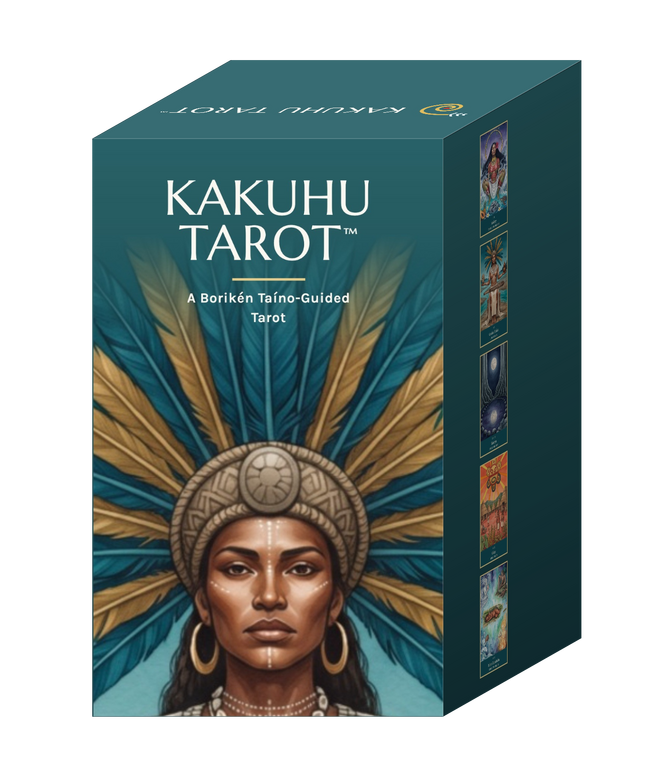
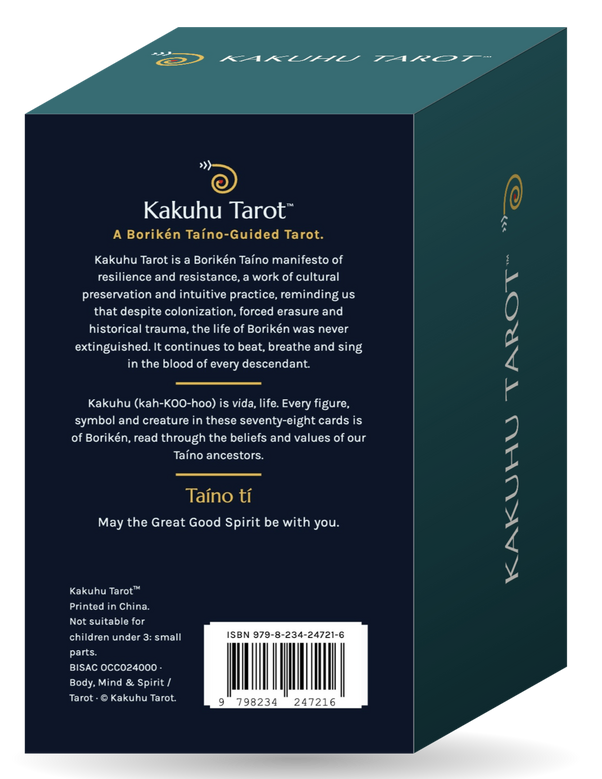
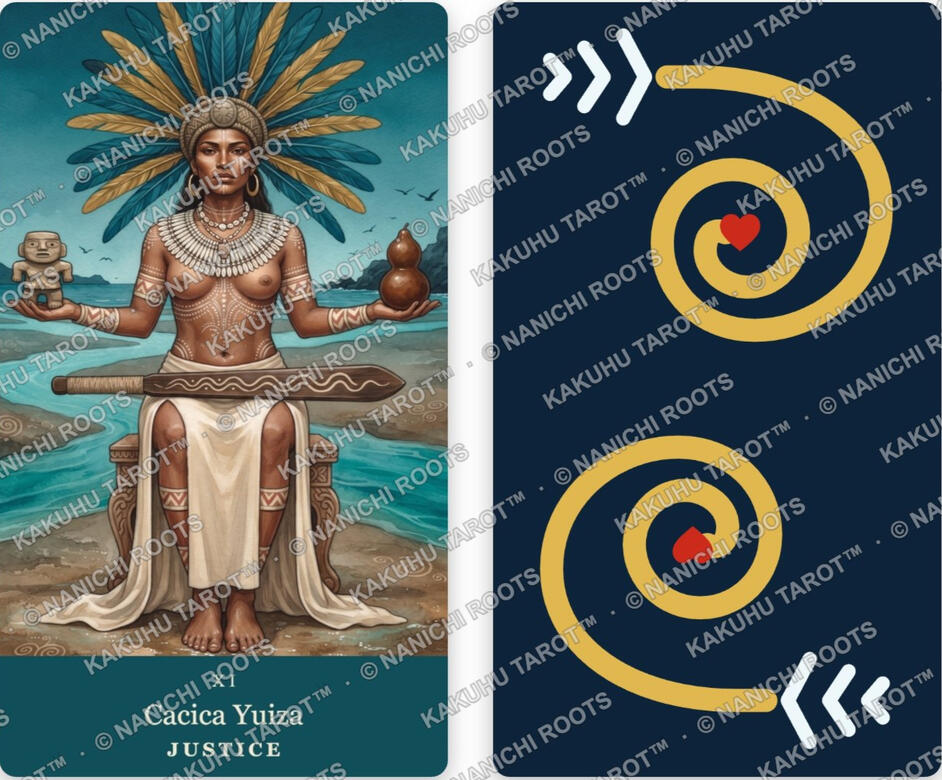
78 cards · 2.75 × 4.75 in · 330 gsm smooth cardstock (all editions)Twenty-two Major Arcana and 56 cards in four suits: Cemís, Vasijas, Cobos and Yucas. Every figure, flora, fauna, and glyph is of Borikén, and the courts are named cacicas and caciques. The Major Arcana are in a watercolor and fluid gouache style, each one specifically designed to suit its mood and story. The four suits are in a softly modeled, realistic style, because they are the everyday world.About the art: The cards were generated with AI. I know many people have strong feelings about AI, and I respect that. I can't paint with my hands, but I have a creative mind. Over 150 hours, I directed every image: I wrote each concept, chose every Taíno figure, symbol, place, plant and animal, set the colors and style, and corrected each card until the Taíno glyphs, dress, people, environment, and mood were right. It took 869 renders to arrive at these 78 cards. We can agree to disagree, but AI has been a wonderful tool for me to exercise my creativity. My hope is that the visuals stir emotions that bring comfort, joy, and pride and that it inspires guidance and wisdom.Custom rigid box · matte laminated (all editions)A sturdy two-piece box made to last, with a lift-off lid. Cacica Yuiza - Justice is on the front, and the Kakuhu symbol and description are on the back. It holds the full deck and the printed pocket guidebook.Pocket Guidebook
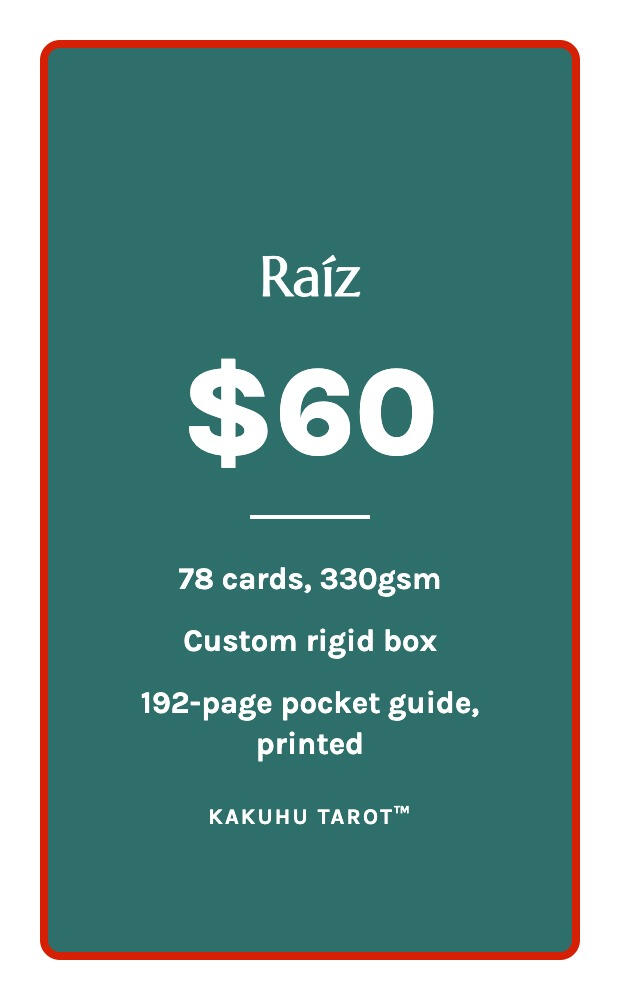
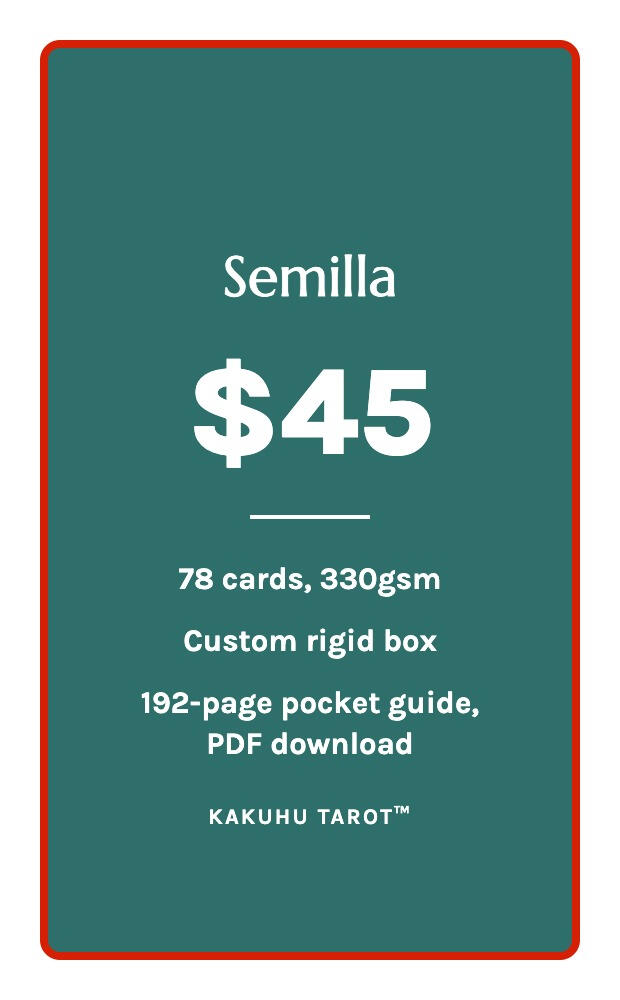
192 pages · Printed (Ceiba and Raíz editions) or PDF (Semilla edition).Your reading companion, sized to sit next to the deck. Every card gets a two-page spread: its Kakuhu meaning, the upright and reversed readings, guiding questions and an affirmation for each. Up front are the Tarot ABCs, the Kakuhu symbol and how to read a spread. In the back is a glossary of the Taíno and Boricua words used throughout and pages for your own reflections.Companion Book
521 pages · PDF download
Available only with Ceiba edition or separate purchaseMore than a guide to the cards, this is a cultural companion to Taíno Borikén. Included is:
- the ethos behind the Kakuhu symbol
- the full Taíno philosophy the deck is built on and the Major Arcana and Suits essence with grounding questions
- 25 pages of nomenclature for all the deities, cacicas and caciques, places, plants and animals of the island, and the Boricua refranes woven through the book and readings.
- 400 pages with each of the 78 card concepts, reinterpretation from traditional tarot, the associated Taíno history or myth, the description of the art and the comprehensive symbolism in, and the full Kakuhu Tarot readings, upright and reversed, each with guiding questions and affirmations.
- 50+ article and book sources I studied, from the colonial chronicles to today's Taíno scholars and communities.
SAMPLE READING
Four of Cemís, upright: A season of peace has finally come. The move is done, the family is settled, the conflict has passed, and the house feels like home. For our people the areyto on the batey was the whole yucayeque dancing and singing what it had built together. This is YOUR areyto. Mark it, say ¡WEPA! out loud, and let yourself be held by the people who kept you safe. Amor con amor se paga, meaning your corillo shows up for you because you showed up for them.
A GIFT WITH YOUR PRE-ORDER!
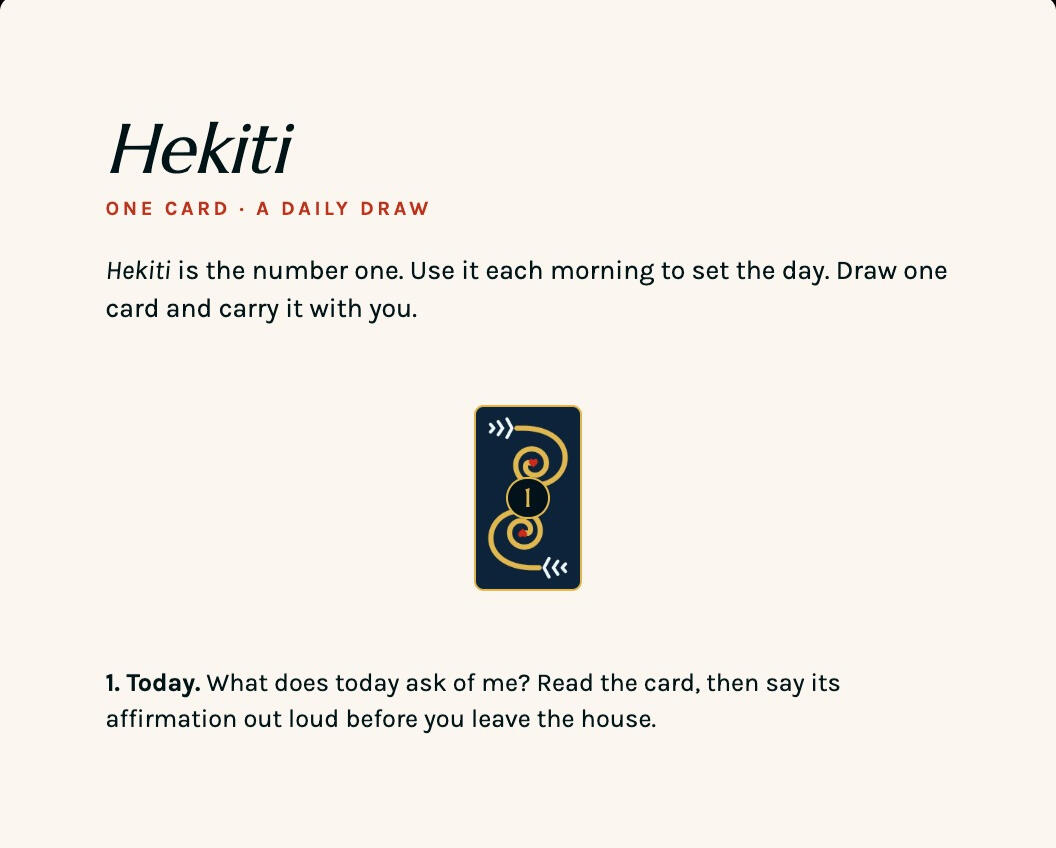
Kakuhu Spreads PDF, 11 Taíno-inspired spreads with instructions.
ABOUT ME
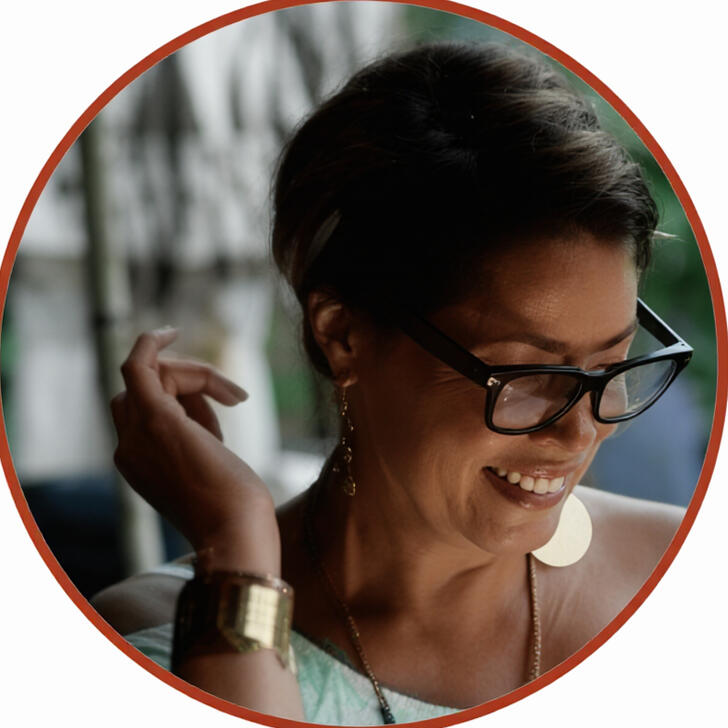
Maritza Arroyo Pérez
GUERRERA STORYTELLER74% Iberian Peninsula · 12% African · 8% Borikén Indigenous · 6% other100% Boricua, Pa'que Tu Lo Sepas
My story, like so many diaspora Puerto Ricans, begins not on the main island but with my family's fierce insistence that Puerto Rico would always be our anchor. I was born in St. Croix, a child of the east coast Fajardo and Vieques diaspora on my mother's side and of the south (Coamo, Salinas, Guayama, Juana Díaz, Ponce) on my father's.My maternal grandparents left Fajardo and Vieques in the 1930s, when the sugar industry collapsed, and they brought their heritage with them. We were raised unapologetically Puerto Rican, learning Spanish before English, eating rice and beans practically every day, and spending summers and Christmases there. For most of my adulthood I have lived in the diaspora of NYC, holding onto the dream so many of us share, returning home.This constant latido, this heartbeat, this connection to a history that is both distant and deeply personal, is why I founded Nanichi Roots. My own story of migration and reclamation taught me that our legacy lives in us and preserving our history is an act of resistance. My work is dedicated to sharing the resources and stories that help you find the ancestors whose strength beats in your heart.Kakuhu Tarot™ grew out of that work. Genealogy gave me the names of my ancestors, but it could not tell me how they saw the world.Colonization, forced erasure and the trauma that followed were meant to end the Taíno world, but they did not. Our words survived, like huracán, hamaca, barbacoa and canoa, and so did we. That resilience and resistance continues today. It is this will that fuels Kakuhu, our vida, our life, and it beats, breathes and sings in the blood of every Borikén descendant.Jajóm (hah-HOM) - Gracias - Thank you¡Pa'lante!
Mari
© 2026 Nanichi Roots LLC
Albany, New YorkAll rights reserved. Kakuhu Tarot™ and the Kakuhu symbol are trademarks of Nanichi Roots LLC. All text, card designs and images on this site are protected by copyright. No part of this work, including translations into other languages and other derivative works, may be copied, reproduced, adapted, distributed or used to train AI without written permission from Nanichi Roots LLC.
Privacy policy
We collect your name, email and shipping address only to fulfill your order and send updates. Payments are processed by Stripe; we never see or store your card number. We don't sell or share your information.We use Google Analytics to see how visitors find and use this site. It collects anonymous visit data, not your name or contact details.To ask about or delete your information, email [email protected]
REMEMBER. RECLAIM. RESIST.